
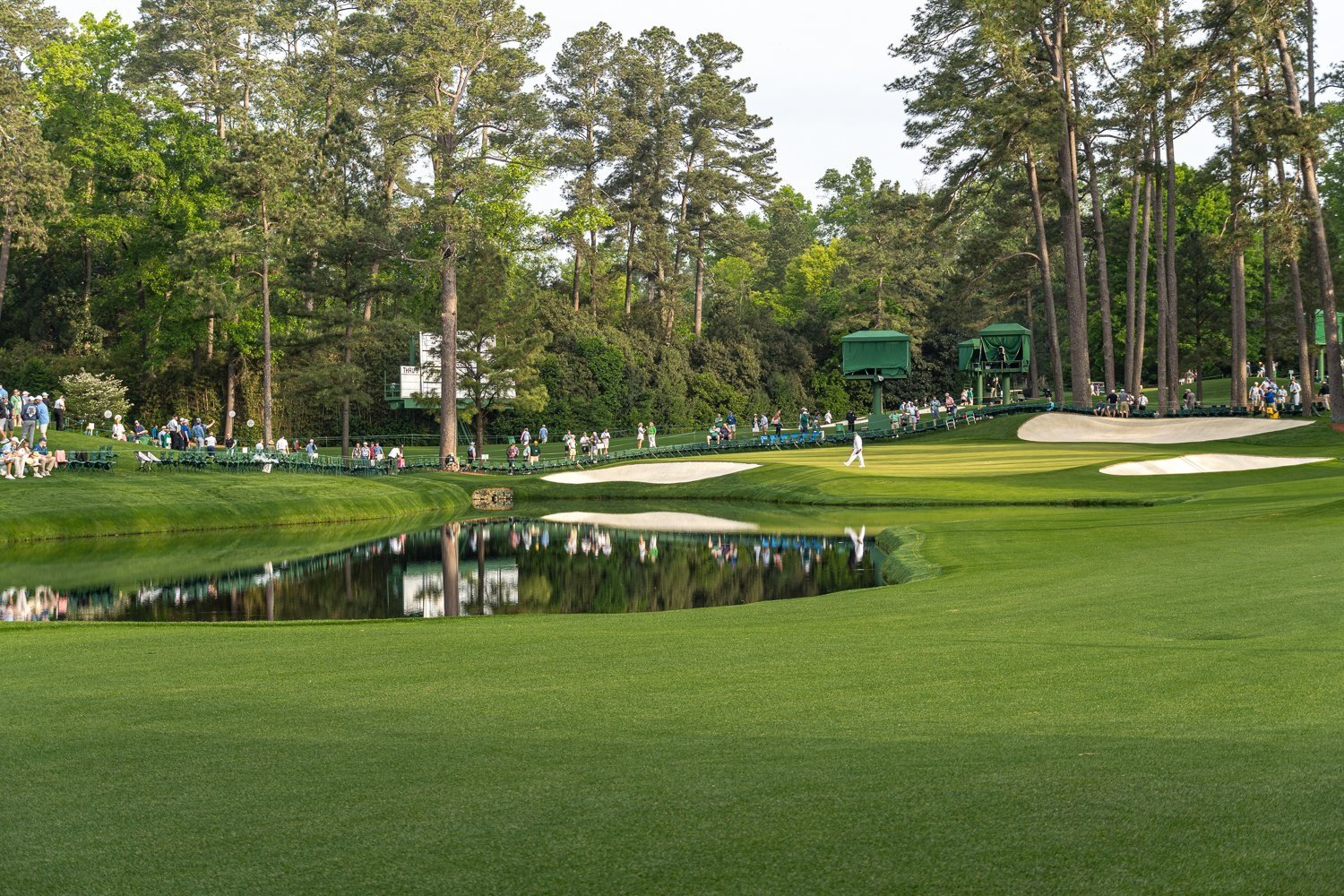
What are the Fundamentals of Golf Course Photography?
Photography is not simply pointing a camera and clicking the shutter. It's a delicate blend of technical knowledge, imaginative vision, and considered composition. Shooting a wedding, a product, or a panoramic golf course view, the same overall principles are at work. Understanding these basics is especially important when photographing golf courses, where natural beauty, precise design, and atmospheric lighting all play key roles in conveying the course’s character. Below, we’ll explore the core elements of photography and explain how each one can be applied to elevate golf course imagery.
1. Lighting – The Foundation of Every Great Photo
Lighting is the single most critical factor in photography. Lighting produces mood, establishes texture, and accentuates detail. For golf courses, lighting will determine the appearance of greens, fairways, bunkers, and water features to the observer.
Golf courses are best shot during so-called "golden hours" — early morning after sunrise and late afternoon before sunset. During these times, the light is soft, warm, and directional, which emphasizes shadows and contours. Morning light may emphasize particularly dew on grass and give a clean, peaceful atmosphere, while sunset light produces long shadows that illustrate shadowing from topography.
Noontime sunlight, however, tends to be hard and flat. But that can be used for a specific shot — say, to capture unblemished blue skies or the rich green of grass. The key is understanding how light direction and quality affect overall picture tone.
For golf course photography, when to take the photo is as important as how to take it. Scheduling the shoot around the location of the sun can turn a disappointing course picture into a cinematic and welcoming one.
2. Composition – Framing the Perfect Scene
Composition refers to how items within the shot are organized. Effective composition guides the viewer's attention and creates a sense of balance and harmony in the photo.
One of the simplest composing skills is the rule of thirds — breaking your image into nine equally sized sections and placing important items along those lines or intersections. This produces a natural, pleasing balance.
Composition in golf course photography can involve placing a green in the lower third and a golden sunrise in the upper third. Cart paths, fairways, or water's edges can be used as leading lines to lead the viewer's eye to the focal point — typically the flagstick or a distant green.
Also, framing with natural sources, like trees or bunkers, can be utilized to establish depth and background within a shot. For drone aerial photography, composition is taken to an entirely new level, where topside perspectives reveal sweeping layouts and symmetry on the course.
3. Understanding Exposure – The Balance of Light
Exposure is how much light reaches the camera sensor. It's controlled by three main settings — aperture, shutter speed, and ISO, or the "exposure triangle."
* Aperture is the size of the lens opening. A big aperture (like f/2.8) provides a shallow depth of field, blurring the background and focusing attention on the subject. A small aperture (like f/11 or f/16) keeps more of the landscape in view — ideal for expansive golf scenery.
* Shutter speed determines the duration that the camera sensor is open to light. A fast shutter (1/1000 sec) freezes action, as in capturing a golfer in mid-swing or water splashing off a fountain. A slow shutter (1/30 sec or slower) is employed to create smooth motion effects, like the soft blur of wind blowing through waving grass.
* ISO controls the light sensitivity of the sensor. Low ISO (100–200) keeps images sharp and distinct under bright light, but higher ISO helps in low light but introduces noise.
Golf course photographers make use of low ISO and small aperture to capture crisply detailed landscapes under natural light. Understanding exposure allows the photographer to adapt to changing conditions — sun-baked fairways to shaded groves — without sacrificing image quality.
4. Color and White Balance – Accurately Capturing Nature
Color in photography establishes mood. Golf courses, greens, deep blues, and sandy tones rely almost completely on accurate and lush colour rendition.
White balance ensures colours will look the way they should by compensating for the color temperature of the light. Early morning light, for instance, is bluish, while light in the evening is orange. White balance correction prevents greens from appearing too yellow or too blue.
Moreover, post-processing software can add depth and contrast to colors so the grass appears lush without being oversaturated. An experienced golf course photographer knows that colors need to be realistic yet engaging — enticing golfers to visit the course in person.
5. Depth of Field – Guiding the Viewer's Attention
Depth of field refers to the amount of an image that is in focus. It's usually controlled by aperture and subject distance.
To record broad golf course vistas, a deep depth of field (large f-stop) is required to keep everything from the near object at the front to the horizon in focus. However, for art or advertising photography — such as a close-up of a ball on the green with the flag in the background — a shallow depth of field (low f-stop) will create dramatic blur in the background and isolate the subject.
Balancing the two styles gives a golf course photographer both creative flexibility — from dramatic, film-like vantage points to intimate, detail shots.
6. Perspective and Angles – Finding Odd Vistas
Perspective defines the way the viewer will read the picture. Varying your angle of shooting can radically alter the mood and interpretation of an image.
For low-angle ground shots, shooting from below can make the course appear larger and put more emphasis on rolling ground. High angles, either on hills, balcony topography around clubhouses, or even aerials by drones, expose overall design and strategy of the course.
Drone photography revolutionized golf course photography. Aerial imaging can reveal entire holes, water hazards, and bunkering patterns that ground photography can simply not show. The images allow golfers to visualize how to play and provide courses with glorious imagery for brochures and websites.
7. Timing and Weather – Embracing Natural Conditions
Weather can have a tremendous impact on mood and lighting. The stark blue sky will bring out the bold greens, and overcast days provide soft, diffused light that kills shadows.
Misty weather can add mystery to early morning photos, and reflection in still ponds create symmetry and tranquility. Skilled photographers embrace these variables — rather than fight them — to create emotionally moving images that tell a story.
For golf courses, posing photography based on ideal weather conditions can have a profound effect on the overall gallery.
8. Post-processing and Editing – The Final Touch
Even the best photos are enhanced by thoughtful editing. Post-processing tweaks color, contrast, sharpness, and composition without distorting reality.
In golf course photography, editing should enhance natural beauty — not overdo it. Highlight and shadow correction brings out texture in grass and sand traps, and color correction supplies realistic coloring. Cropping enhances framing or deletes distractions.
Commercial edit software such as Adobe Lightroom facilitates such minute but effective improvements that the course still looks real and inviting.
9. Storytelling – Capturing More Than Just a Scene
Every photo is a tale. In golf course photography, maybe the tale is one of peace of an early morning game, the challenge of a signature hole, or the luxury of the surrounding terrain.
Directing golfers moving, grounds staff manicuring greens, or twilight glow over the clubhouse all bring in human and emotional aspects. Storytelling transforms photography from record to an image-driven event that speaks emotionally to observers.
10. Consistency – Building a Cohesive Visual Identity
Lastly, consistency is key — especially to golf courses using photography as a tool of branding and marketing. A consistent approach to color tone, lighting, and composition in photos provides a familiar visual identity.
Used consistently across websites, social media, and print, professional golf course photography supports brand image and makes the course immediately identifiable.
Conclusion
The fundamentals of photography — lighting, composition, exposure, perspective, and editing — all come together to create compelling golf course photography. All those things not only reveal the beauty of a course but evoke feeling and mood, which enables golfers to become emotionally invested in the course before they ever set foot on the fairway.
With thoughtful use of the principles, golf course photography can transform mundane landscapes into works of art that disclose design, skill, and nature. Shot from the ground or using a drone, skilled professionals who understand these principles can elevate a golf course's brand — literally, by photographing better; and figuratively, by bringing the character of the game one image at a time.